A local pool service business owner once shared that cumbersome billing not only diminished client trust but also cost valuable time each week. Modern invoicing software is now pivotal for service companies aiming to stay ahead in a competitive market. Today’s tools are more than just digital calculators-they provide strategic insights that power growth and profitability.
Understanding the nuances of pool service invoicing can transform back-office operations. With technology driving efficiency in the service industry, advanced software solutions have become a game-changer for companies large and small.
This article dives into the best software options available, highlighting features that help streamline billing, improve cash flow, and handle increasing demands. It also considers important market trends and expert insights to help you make an informed decision.
Industry Growth and the Need for Digital Transformation
The pool service market in the U.S. is booming. In 2025, the pool construction market reached a staggering scale of $16.5 billion with steady growth, according to recent data [Amra And Elma LLC]. However, as companies expand, traditional billing methods start presenting challenges. The lag in invoicing and manual entries can lead to errors, miscommunication, and lost revenue.
Recent industry surveys reveal that about 73% of pool service professionals reported increased revenue compared to the previous year [Skimmer]. These figures demonstrate that many businesses are not only growing but also diversifying their client base. As operational complexities increase, the back office must keep pace.
Digital invoicing software addresses these concerns by automating routine tasks, reducing human error, and enabling real-time financial tracking. In a highly competitive market, streamlined billing isn’t just a luxury-it’s essential for sustained growth.
Key Features of Leading Invoicing Software
Automated Billing and Scheduling
Automation simplifies the invoicing process by generating accurate bills on a regular schedule. The vast majority of pool service professionals already rely on monthly billing practices, with around 55% integrating chemical services into their invoices [Skimmer]. Software with automated billing features reduces the chance of oversight and improves cash flow by ensuring that bills are sent and followed up promptly.
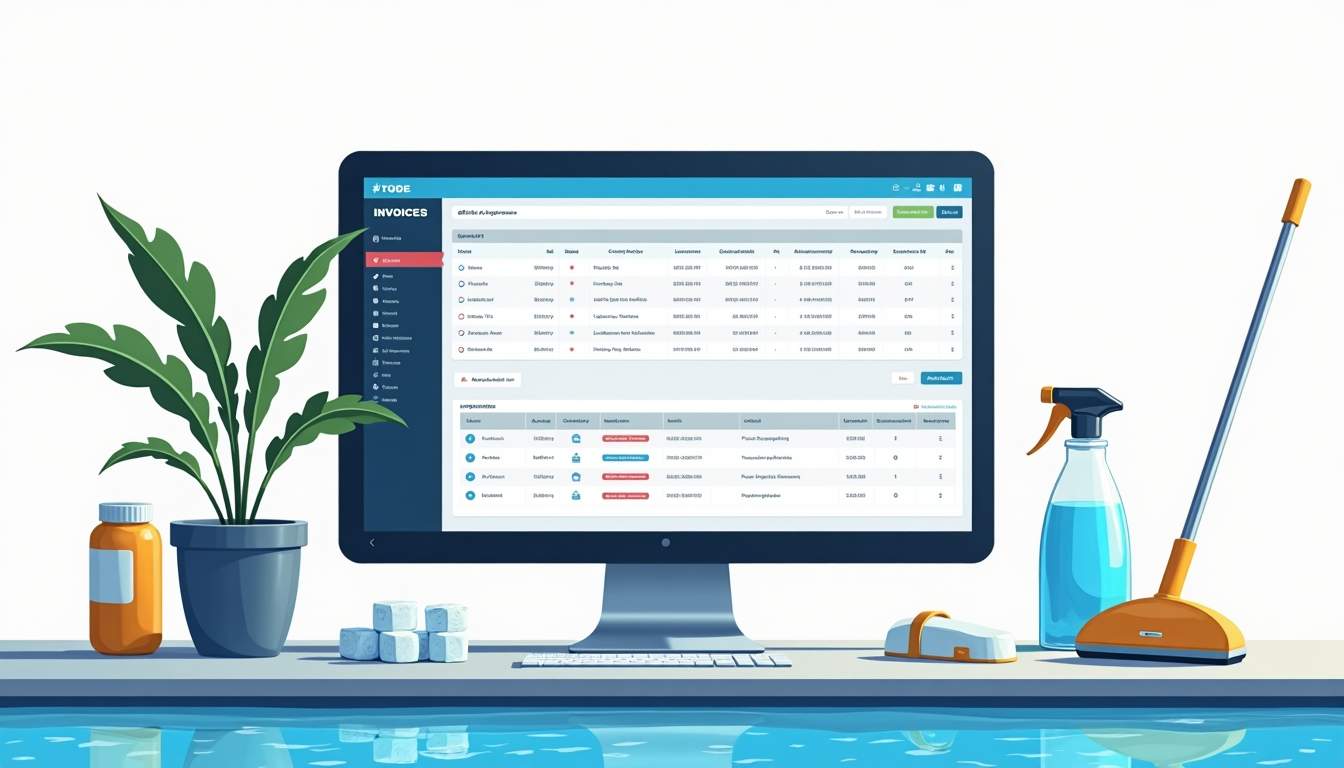
Scheduling capabilities offer an integrated calendar that syncs with service calls. This integration not only tracks appointments but also connects each task with an invoicing entry, leading to fewer administrative gaps and a higher level of professional service.
Tools that combine scheduling and billing provide an end-to-end solution that eases the administrative burden, freeing up time for focusing on customer service and quality maintenance.
Customizable Invoice Templates
Every pool service business has a unique flavor, and customized invoice templates allow companies to reflect their brand identity while including necessary details. A personalized invoice can help improve client trust and simplify the communication of services rendered.
Modern invoicing software offers robust customization options-colors, logos, and detailed service breakdowns can all be tailored to align with a company’s brand. An invoice that clearly communicates the scope of work reduces disputes and accelerates payment processing.
Customization also ensures that regulatory details and industry-specific notes are included automatically, complying with business standards and industry guidelines.
Mobile Accessibility and Cloud-Based Systems
Service professionals are often on the move, answering service calls, managing supplies, and prioritizing customer satisfaction. Mobile accessibility in invoicing software is crucial in this dynamic environment. A mobile platform ensures that invoices can be generated, sent, and tracked right from the field.
Cloud-based invoicing systems further enhance operational efficiency by allowing multiple team members-irrespective of location-to access the same data without delays. Such systems mean that updates, client changes, or new service inquiries are tracked uniformly, reducing errors from traditional paper-based or standalone digital systems.
This continuity is especially important when scaling operations, as real-time data availability leads to better decision-making.
Integrating Advanced Features for Enhanced Profitability
Data Analytics and Real-Time Reporting
Data is at the heart of operational efficiency. Well-integrated invoicing software not only processes payments but also provides comprehensive analytics. Business owners can evaluate trends in revenue, service calls, and client engagement through intuitive dashboards that produce real-time reports.
Companies in the pool service industry have experienced growth in service calls, with 55% of businesses noting an increase in this metric during Q3 of 2025 [Pool & Hot Tub Alliance]. Real-time reporting enables quick adjustments and timely intervention when issues arise, ensuring that both service delivery and financial health remain on track.
Enhanced analytics also uncover patterns that can guide pricing adjustments, promotional strategies, and resource allocation, all contributing to a stronger bottom line.
Integration with Other Business Tools
The best invoicing platforms do more than just bill clients. They integrate seamlessly with other essential business tools such as customer relationship management (CRM) systems, inventory management, and financial software. An integrative approach ensures that essentially every aspect of a service operation-from scheduling to billing-links up into one cohesive system.
This interoperability reduces duplicate data entry and lowers the risk of errors. It also enables real-time updates across multiple fronts, providing a clearer picture of overall business performance without the need for separate systems.
Expert voices in the industry emphasize the importance of technological integration. Leaders note that understanding your numbers and embracing technology are critical steps for improved profitability and efficiency [Skimmer].
Secure Payment Processing and Client Portals
Prompt payment collection remains a cornerstone for healthy cash flow. Secure payment processing ensures all transactions are encrypted and verified, which is crucial when handling sensitive financial data. Today, expecting a secure payment solution is not just industry best practice-it’s an operational necessity.
The incorporation of client portals within invoicing systems further boosts efficiency. A portal allows clients to view and pay invoices at their convenience, reducing friction and delays associated with payment collection. Digital receipts and transaction records also help streamline follow-ups and provide proof of transactions when needed.
Streamlining these processes ultimately benefits both the service provider and their customers, with technology acting as an impartial mediator that ensures security and transparency throughout every transaction.
Navigating Market Dynamics and Tariff Impacts
Rising Component Costs and Their Effects
Not all challenges in the pool service industry stem from operational inefficiencies. External factors can also impact profitability. For example, in early 2025, revised U.S. import tariffs on select hardware components led to increased acquisition costs for key parts needed in pool and spa service solutions [360iResearch]. These cost pressures ripple through the business, often necessitating adjustments in billing strategies.
When costs rise, transparent and detailed invoicing becomes even more important. Professional invoicing software enables the clear itemization of parts, labor, and additional fees, helping to justify necessary price increases to customers. This clarity ensures that clients understand the basis of their charges, fostering trust even during times of operational change.
In these situations, the adaptability of invoicing software supports both the internal management of cost fluctuations and the external communication required to maintain customer satisfaction.
Billing Frequency and Industry Trends
Billing frequency is another significant element in managing cash flow. Approximately 55% of pool service professionals bill monthly, which includes recurring charges like chemical services [Skimmer]. Monthly billing remains a preferred cadence because it merges customer convenience with predictable revenue streams.
Advanced invoicing software can customize billing cycles to accommodate unique service agreements. Some service providers are exploring alternative models such as quarterly invoices or even on-demand billing based on real-time service delivery data. Flexibility in billing frequency allows companies to align their revenue cycles with the consumption patterns of their clients, ensuring that both parties feel the pace is right.
Adapting billing frequency based on data analytics ultimately creates a win-win scenario for businesses and their customers, reducing friction and enhancing satisfaction.
Addressing Challenges with Technology Adoption
Overcoming Resistance to Change
Switching from traditional, manual billing processes to digital invoicing software can be met with resistance. Many service providers are accustomed to an established routine, confident in their current methods. However, industry leaders point out that relying on simple flat-rate billing often leaves much money on the table. One expert notes that with today’s technology, there is no reason to stick with outdated methods [ProValet].
Doubt and uncertainty are natural when transitioning to a new system. Yet, the benefits far outweigh the transitional challenges. Modern platforms provide comprehensive tutorials, ongoing customer support, and thorough onboarding processes designed to streamline the adoption process.
Investing in proper training for staff and monitoring initial implementation closely will help each team member become comfortable with the new system, ensuring a smooth and effective transition.
Cost Considerations and Return on Investment
Cost is often at the forefront of discussions about adopting new invoicing software. While budget constraints are real, the long-term return on investment (ROI) frequently justifies the expense. Efficient invoicing reduces manual error and expedites cash flow, which in turn directly impacts profitability. With technology's ability to streamline operations, companies see quicker turnaround times in receiving payments, better coordination across departments, and improved overall financial health.
For many pool service professionals, a modest initial investment in robust invoicing software translates into significant long-term savings. The cost of inefficiencies-lost time, erroneous bills, and payment delays-often eclipses the price of adopting a comprehensive solution.
Some experts even argue that shifting to a digital model is essential for future-proofing operations against unpredictable market shifts, ensuring that businesses are equipped to handle both expected growth and unforeseen challenges.
Evaluating Top Software Solutions in the Market
Several leading invoicing software platforms have emerged as favorite choices for pool service companies. They offer a range of features designed specifically for service operations-from automated billing to real-time analytics and secure payment processing. The following sections detail what to look for when evaluating these solutions.
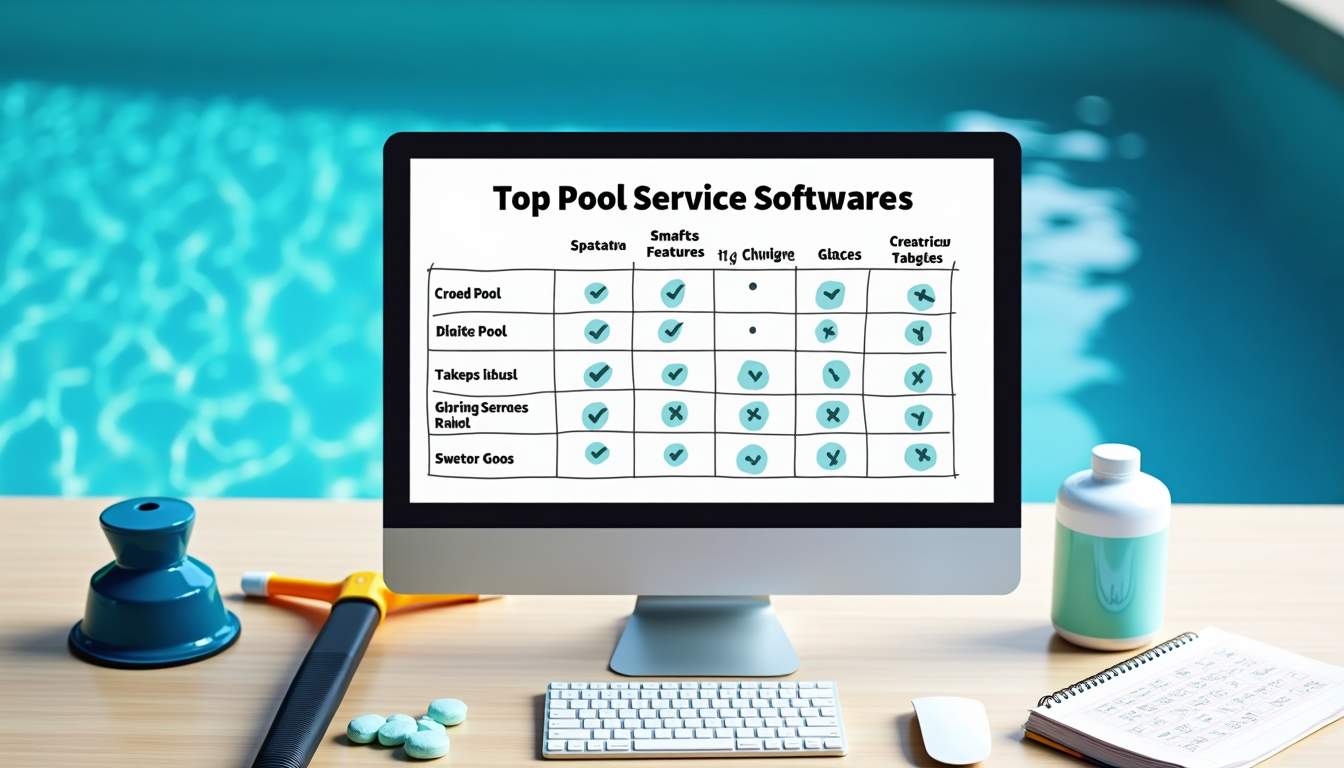
Features and functionality vary substantially between providers. Reviewing each software’s ability to integrate with existing systems is critical. The best platforms are designed with interoperability in mind, ensuring a seamless transition and ongoing data integrity.
It is essential to look for tools that not only handle current demands but also offer scalability for future growth. A future-ready solution combines flexibility and robust support, ensuring the platform evolves alongside the business.
User-Friendly Interface and Experience
Simplicity remains king in software adoption. Even the best software solutions can falter if they are difficult to navigate. A well-designed user interface reduces training time and minimizes errors in invoicing and data entry. Look for platforms that offer customizable dashboards, clear categorization of services, and a straightforward navigation system.
Simultaneously, the user experience should accommodate both tech-savvy users and those who are less comfortable with digital tools. Layers of intuitive design, guided tutorials, and responsive customer support distinguish top solutions from those merely functioning as basic digital tools.
Ease-of-use translates to improved adoption rates among employees, as well as better service experiences for clients who encounter the system through digital invoices and online portals.
Scalability and Custom Integrations
The pool service industry is evolving rapidly, with expanding service offerings and a growing customer base. Software that scales with your business is a must-have. Scalability means the invoicing system can handle increased transaction volumes and complex service packages without lagging or becoming overly complicated.
Custom integrations are a natural extension of scalability. Through APIs and custom modules, invoicing software can connect with other tools like CRM systems, inventory management software, and even digital marketing platforms. This integration ensures data flows smoothly across various business functions, reducing redundant manual entries and cutting down on errors.
Today’s market demands flexibility. An invoicing platform that grows with your business helps maintain consistency and reliability regardless of whether you are invoicing ten clients or a hundred.
Implementing Invoicing Software: Best Practices
Integrating new technology into an existing business process demands a thoughtful, strategic approach. Initiating change incrementally can mitigate disruption. For pool service providers, a phased approach-starting with core invoicing functions before expanding-can ease the transition and allow staff to acclimate.
Key best practices include detailed planning, staff training, and clear communication with clients. Establishing a timeline for implementation and setting measurable goals for improvement can help guide the process from start to finish.
Systems often provide demo versions and trial periods so that businesses can test the software in a real-time environment. This opportunity not only aids in assessing the software's fit but also helps identify which features will provide the greatest impact on operations.
Training and Technical Support
Effective implementation depends largely on robust training and ongoing technical support. Leading platforms offer comprehensive onboarding that includes video tutorials, live webinars, and dedicated support teams. Setting up training sessions ensures that all team members have a clear understanding of the tool’s functionalities from day one.
Ongoing customer service, whether through chat, phone support, or online forums, is equally critical. Technical support not only resolves immediate issues but also facilitates a smoother adoption curve as users encounter and overcome small hurdles along the way.
Ultimately, confidence in the technology will be reinforced as employees become familiar with its capabilities, leading to enhanced productivity and more accurate billing processes.
Monitoring, Feedback, and Continuous Improvement
Installing an invoicing solution is just the beginning. Continuous monitoring of performance metrics and collecting feedback from both staff and customers will provide insights into areas for improvement. Regularly scheduled reviews of key performance indicators can help identify bottlenecks and areas where custom adjustments could further streamline operations.
Companies can benefit from establishing a feedback loop that involves end-users in the refinement process. As feedback accumulates, adjustments can be made to the software’s configuration, ensuring that it evolves with the changing needs and dynamics of the business.
This proactive approach to continuous improvement sets industry leaders apart, as they can quickly adapt to market changes while maintaining precision in billing processes.
Future Trends and the Bigger Picture
Looking ahead, the integration of artificial intelligence (AI) and machine learning (ML) in invoicing software may further revolutionize pool service accounting. These technologies promise even smarter data analytics, predictive billing, and automated adjustments based on historical trends. Embracing such innovations will continue to lift the standard of service delivery and operational efficiency.
The pool service industry is already experiencing steady growth and improved profitability, as evidenced by rising revenues and increased service call volumes [Pool & Hot Tub Alliance]. The continued evolution of technology ensures that tomorrow’s challenges can be met with smarter solutions.
As market dynamics shift, software that adapts to new conditions-such as tariff adjustments and resource cost fluctuations-will be more relevant than ever. Companies that invest in dynamic, scalable invoicing solutions are better positioned to manage these external pressures while continuing to deliver exceptional customer service.
Conclusion: Embracing a Digital Future in Pool Service Billing
The pool service industry is navigating challenges and seizing growth opportunities through technology. Transitioning to advanced invoicing software translates to more precise billing, faster cash flow, and transparent, accountable transactions. With industry experts underscoring the importance of embracing modern tools [Skimmer] and data-driven insights, the investment in a reliable invoicing solution becomes a strategic imperative.
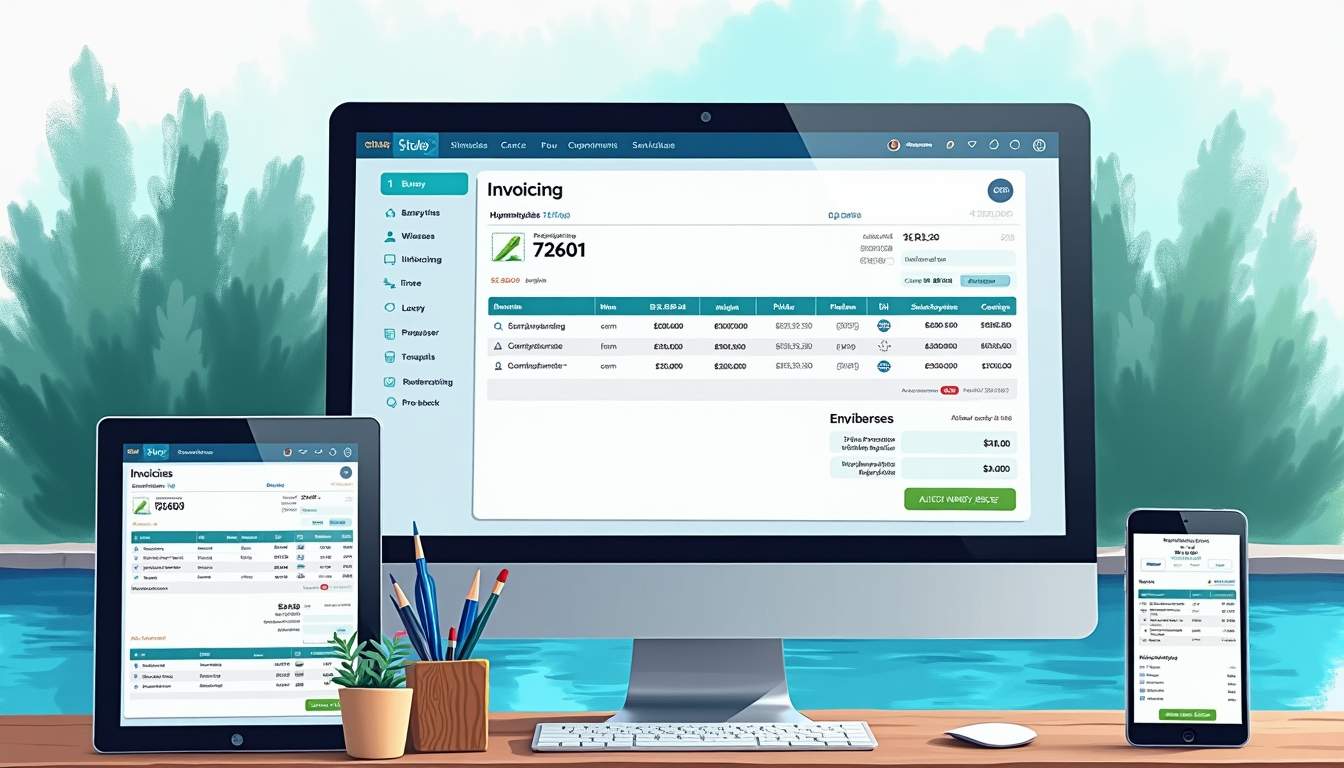
Properly integrated invoicing software not only meets the current demands of the market but also prepares businesses for the future. From automated billing and real-time reporting to secure payment processing and seamless integrations with other business tools, these solutions streamline operations and address the growing complexity of service delivery.
The clear message for pool service providers is that adapting to a digital invoicing system can result in measurable improvements in efficiency and profitability. As the industry experiences continued growth, forward-thinking businesses will leverage the power of technology to stay competitive, improve client relationships, and bolster their bottom line.
Implementing the right invoicing software may be one of the most impactful decisions a pool service provider can make. With options that offer customization, scalability, and advanced analytics, businesses stand to benefit from a more integrated, error-free, and profitable billing process. In an environment where precision and accountability matter, these software solutions empower pool service companies to focus on what they do best-delivering quality service and enjoying sustainable growth.