A customer emails support, opens a chat on your website, and calls your sales rep-all before lunch. If your systems don’t talk to each other, that interaction feels fragmented and frustrating. When your tools are unified and intelligent, the same situation becomes an opportunity to build loyalty, collect insight, and even grow revenue.
That gap-between fragmented and seamless-is where the right customer service software stack earns its keep. In 2025, the stakes are higher than just faster response times. Service platforms are becoming the backbone for revenue, retention, and product strategy. AI is moving from a bolt-on chatbot to the core engine of routing, recommendations, and sentiment understanding. And the market is investing heavily: the global customer service software market is projected to reach USD 96.6 billion by 2035, growing at a 6.5% CAGR from 2025 to 2035Future Market Insights.
Why 2025 Is a Breakout Year for Customer Service Platforms
Customer service software is no longer a niche category. It has grown into a strategic layer that touches sales, marketing, product, and operations. Analysts expect the global customer support software market alone to be valued at roughly USD 7.85 billion in 2025, driven by demand for better user experiences and faster issue resolutionFuture Market Report. At the same time, broader customer service and engagement platforms continue to expand as organizations standardize on fewer, more powerful systems.
Contact centers are undergoing the most dramatic shift. The global contact center software market is projected to grow from USD 63.90 billion in 2025 to USD 213.54 billion by 2032, at a compound annual growth rate of 18.8% during that periodFortune Business Insights. That growth reflects a move away from legacy on-premise telephony toward cloud-native, AI-enhanced platforms that unify voice, chat, email, and social.
AI is the common denominator behind this acceleration. High-performing IT channel partners-those with 20%+ revenue growth over two years-are already integrating AI to maximize customer outcomes, foster trust, and build scalable, services-led business models with vertical specializationIDC via ITPro. That mindset is spreading to service leaders who view support not as a cost center but as a differentiator and growth lever.
Key Buying Criteria for Customer Service Software in 2025
With vendors in every niche, choosing “the best” tool is less about feature checklists and more about system design. The goal is to assemble a stack that delivers a single, coherent experience to customers and agents. The right solution for a high-volume e-commerce brand won’t match a B2B SaaS company with complex deals and long relationships, but the evaluation criteria are remarkably consistent across industries.
Start by mapping customer journeys, not channels. List how customers actually seek help: self-service, email, live chat, phone, social, in-product messages. Then evaluate platforms on their ability to stitch these touchpoints into one view. Omnichannel routing, unified conversation history, and centralized customer profiles are table stakes for reducing handle time and repeat contacts.
AI capability is another non-negotiable dimension. Modern platforms should automate triage, suggest responses, detect sentiment, and surface the right knowledge article in real time. Recent research on AI-driven sentiment analysis in e-commerce applications, for example, achieved 89.7% accuracy on diverse, large-scale datasetsarXiv. Results like this show that AI can reliably interpret tone and emotion at scale, which directly impacts prioritization, escalation, and retention strategies.
Top Categories of Customer Service Software (and Where Each Shines)
No single platform perfectly covers every scenario, but the landscape does fall into a handful of core categories: omnichannel help desks, CRM-centric service platforms, contact center suites, AI copilots and automation layers, plus knowledge and self-service tools. Understanding the strengths of each category helps leaders design a stack that matches their operating model rather than forcing processes to fit the tool.
The software highlighted in this section are not theoretical options-they’re the systems service-focused teams rely on every day. Some organizations standardize around one ecosystem; others use a “hub and spoke” model, pairing a central CRM or platform with best-of-breed tools for chat, voice, or knowledge management. The right strategy depends on scale, internal skills, and how differentiated your service experience needs to be.
Omnichannel Help Desk Platforms: Your Operational Backbone
Omnichannel help desks consolidate email, chat, web forms, and social messages into a single queue with shared SLAs and reporting. Tools like Zendesk, Freshdesk, and Zoho Desk excel here, particularly for digital-first teams that don’t run massive phone-heavy contact centers. These systems focus on ticket management, macros, collaboration, and workflows that reduce agent effort and keep responses consistent.
For growing companies, an omnichannel help desk is often the first major upgrade from shared inboxes and spreadsheets. The most important evaluation question is not “Who has the most channels?” but “How easy is it to adapt this system to our workflows?” Look closely at automation builders, tagging, and integration options with your CRM, billing, and product analytics-this is where efficiency gains compound over time.
CRM-Centric Service Platforms: Unifying Sales, Marketing, and Support
When sales and success teams are tightly coupled, CRM-centric platforms like Salesforce Service Cloud, HubSpot Service Hub, and Microsoft Dynamics 365 Customer Service start to shine. These tools embed service capabilities directly into the same environment used for leads, opportunities, and account management, giving every team a single source of truth about customer history and value.
A notable trend in 2025 is the rise of AI copilots built inside CRM platforms. In January 2025, SuperOffice launched “SuperOffice Copilot,” an AI assistant integrated into its CRM that automates repetitive tasks and provides real-time insights for usersSuperOffice. This type of embedded AI changes the day-to-day for service reps: drafting email responses, summarizing past interactions, or highlighting at-risk accounts without requiring agents to jump between tools.
CRM-aligned service platforms are especially powerful for B2B organizations with account-based motions. Escalations, renewals, and expansions live in the same record as support history, so conversations move from “What’s your ticket number?” to “Let’s talk about how this issue affects your go-live or renewal date.” That context is often what separates average experiences from truly advisory relationships.
Contact Center Suites: Voice-Heavy, Regulated, and High-Volume Environments
For organizations where phone remains the dominant support channel-think logistics, healthcare vendors, financial services technology providers-contact center platforms like Genesys Cloud CX, NICE CXone, Five9, and Amazon Connect often take the lead role. These systems specialize in intelligent call routing, IVR, workforce management, quality monitoring, and compliance recording, with digital channels layered in.
The rapid growth forecasted for contact center software-from USD 63.90 billion in 2025 to USD 213.54 billion by 2032Fortune Business Insights-is driven partly by enterprises retiring legacy PBXs and moving voice into the same cloud ecosystem as chat and email. That shift opens the door for AI-based features like conversational IVR, automated call summarization, and real-time agent coaching, which were either impossible or prohibitively expensive on older systems.
When evaluating contact center suites, prioritize call quality and reliability first, then drill into AI capabilities, reporting flexibility, and integration with your CRM or ticketing platform. A technically impressive IVR is useless if your agents are toggling between three tools to understand who is calling and why.
AI Copilots, Chatbots, and Automation Layers
AI is no longer a “nice to have.” It’s quickly becoming the layer that decides which agent should handle a case, what they should say, and which customers are silently unhappy. High-performing channel partners already use AI to maximize customer outcomes and build scalable, services-led business models with vertical specializationIDC via ITPro. The same thinking applies directly to internal service teams.
Specialized automation platforms-such as AI-first chatbots, workflow engines, and “copilot” assistants-sit on top of your existing CRM or help desk. They handle routine requests end-to-end, propose next actions, and keep humans focused on exceptions. The research on AI-driven sentiment analysis in e-commerce, which achieved 89.7% accuracy on large, diverse datasetsarXiv, illustrates how mature these capabilities have become. Applied to service, similar models can flag frustrated customers, escalate proactively, or adjust bot behavior mid-conversation.
When adding AI layers, look for three things: clear governance controls, transparent training data practices, and practical, front-line use cases. Tools that promise “magic” but do not plug cleanly into your existing workflows tend to stall after exciting early demos. By contrast, copilots that simply shave 30–60 seconds from every case note or email reply quietly transform capacity over a quarter.
Knowledge Management and Self-Service Portals
Self-service is where great service experiences quietly begin. A robust knowledge base and customer portal can deflect a meaningful share of repeat questions, but more importantly, they give customers the control and speed they expect. Platforms like Confluence, Notion, Guru, and dedicated knowledge tools integrate with help desks and CRMs to provide a single, searchable source of truth for both agents and customers.
The best knowledge systems treat content as a living product. Agents contribute insights from the front line, product teams document changes at launch, and AI suggests relevant articles during live interactions. As AI models become more capable, they increasingly rely on this content as their “ground truth,” making the quality and structure of your knowledge base a direct influence on bot accuracy and agent assistance.
When assessing options, look at authoring experience, permissioning, version control, and analytics. Which articles lead to contact deflection? Where are customers abandoning self-service and reaching out anyway? Those signals help prioritize what to write next and where process or product changes might be more effective than more content.
How to Choose the Right Mix for Your Business
Knowing the categories is one thing; selecting the actual tools is another. The most common misstep is trying to copy another company’s stack without respecting your own constraints and goals. A high-growth SaaS company with a product-led motion will need very different capabilities than a field services company dispatching technicians to customer sites.
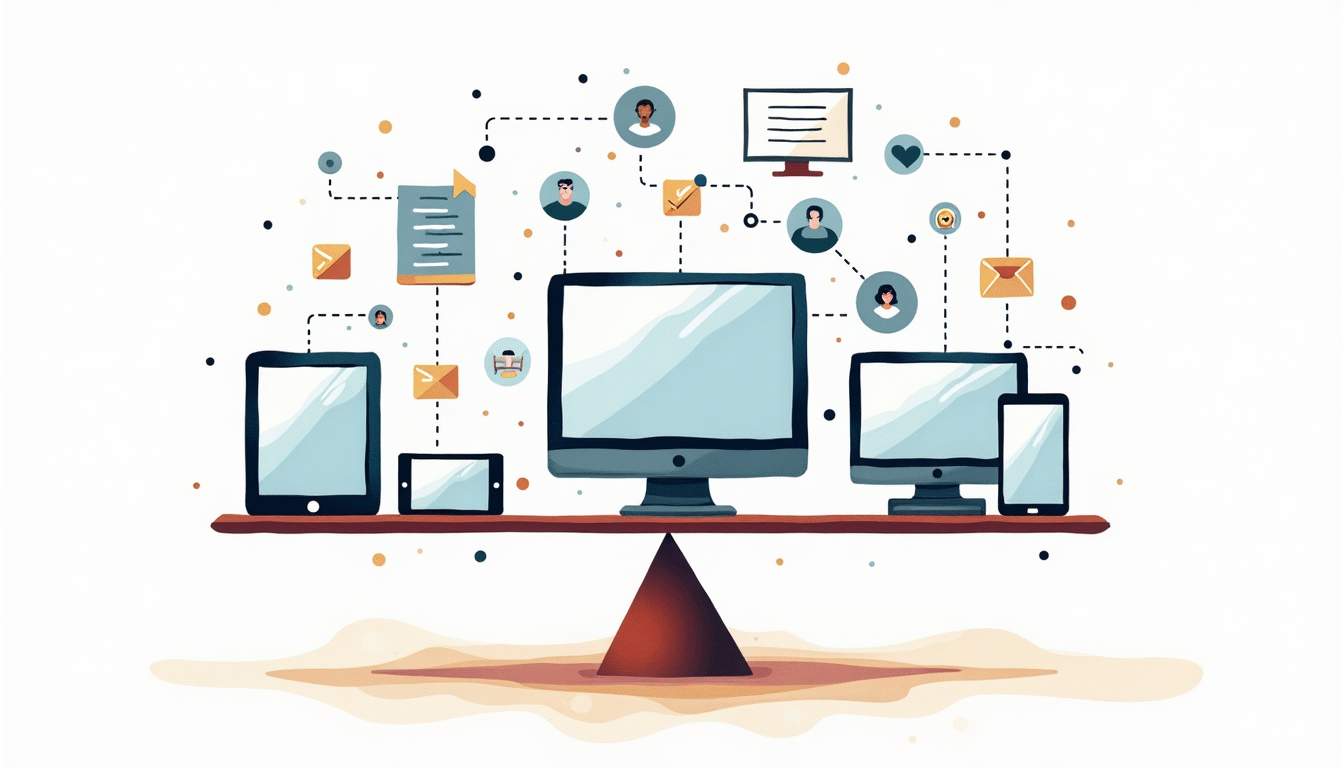
Anchor your decision-making around three lenses: customer expectations, operational complexity, and internal capabilities. Customer expectations tell you which channels and response times matter most. Operational complexity defines how much you benefit from automation and advanced routing-dynamic SLAs, skill-based assignment, and multi-language support. Internal capabilities determine how far you can push customization, integrations, and AI without overwhelming your team.
As you evaluate, insist on seeing real workflows during demos: a new ticket coming in from chat and escalating to voice, a bot handing off to an agent mid-conversation, an account manager viewing support history inside the CRM. Tools that cannot demonstrate these scenarios in your context will likely struggle in production.
A Practical Implementation Roadmap for 2025
Even the best platform will under-deliver without a clear rollout plan. Implementation is where strategy turns into reality, and where teams either gain confidence in new systems or retreat to old habits. A disciplined but pragmatic approach keeps change manageable while still unlocking early wins that build momentum.

Begin with a focused scope: a single region, product line, or channel where the pain is high and success is easy to measure. Define clear goals such as reducing first response time, improving CSAT, or cutting handle time for a specific case type. Then configure your chosen tool to support that scenario end to end-routing, macros, knowledge, reporting-before adding complexity.
Invest heavily in enablement. Agents, supervisors, and cross-functional partners need not just “how-to” training but context on why the system works the way it does. Share dashboards widely, celebrate behavior that uses the new tools effectively, and treat feedback as design input rather than resistance. Where AI is involved, be transparent about what it can and cannot do, and give agents easy ways to correct or override suggestions.
Future Trends to Watch Beyond 2025
The customer service software decisions made in 2025 will likely shape your operating model for the next five to seven years. That makes it worth looking slightly over the horizon. Two themes stand out: deeper verticalization and more proactive, predictive service experiences driven by AI and real-time data.

Verticalization is already visible in how high-performing IT channel partners operate. Those achieving 20%+ revenue growth over two years are integrating AI not just generically, but to build specialized, services-led business models in specific industriesIDC via ITPro. The same pattern is coming to customer service platforms: out-of-the-box workflows for healthcare, financial services, field service, and e-commerce that embed domain-specific logic rather than generic ticket templates.
On the predictive side, the combination of behavior data, product telemetry, and sentiment analysis will allow service teams to act earlier-reaching out before a customer submits a ticket or churns. Research demonstrating nearly 90% accuracy in AI-driven sentiment analysisarXiv hints at how reliable these early-warning signals can become. As this matures, the line between “support,” “success,” and “account management” will blur into a single, data-informed customer health function.
The throughline across all of these trends is simple: platforms are consolidating, AI is moving to the center, and service is becoming a primary driver of growth. The businesses that treat their customer service software as a strategic asset-not just a ticketing tool-will be best positioned to build resilient, trusted relationships in 2025 and beyond.