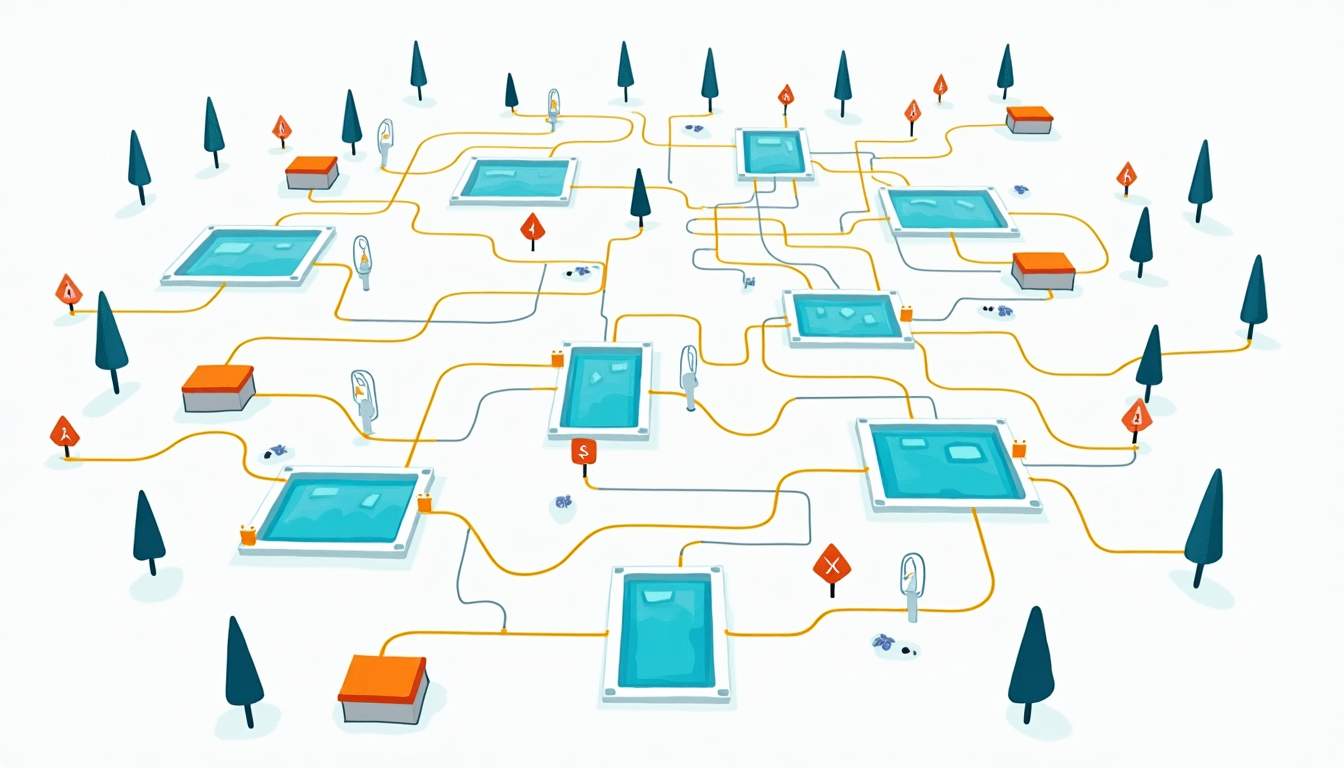
The busiest pool routes usually fall apart for the same reasons: a technician calls in sick, an urgent green pool hits the schedule, a truck breaks down, or a commercial client demands an emergency visit before their weekend rush. The companies that stay calm and profitable in those moments are the ones that have quietly wired automation into every part of their operations.
Why Automation Is Now Mission-Critical For Pool Companies
The pool industry is no longer a slow, seasonal niche. The global commercial pool service market alone was valued at roughly USD 8.5 billion in 2022 and is projected to reach about USD 11.3 billion by 2027, reflecting a 5.7% compound annual growth rate (CAGR) during that periodanchor. That growth means more accounts, more competition, and far less room for manual, spreadsheet-based management.
On the residential side, the global swimming pool market was valued at approximately USD 7.6 billion in 2020anchor. At the same time, homeowners in the U.S. spend about USD 960 per year on pool maintenanceanchor, which makes every visit, chemical adjustment, and upsell opportunity matter. When labor is tight and demand is strong, automation is no longer a “nice-to-have”-it is how pool companies protect margins while still offering responsive, high-touch service.
Customers are also adopting more technology in their pools. The percentage of pools fitted with automation and remote control systems has climbed to 45% as of 2022anchor. Automated cleaning systems are now in about 30% of poolsanchor, and the use of smart pool water monitoring systems grew by 40% between 2020 and 2023anchor. When your customers’ equipment is getting smarter at this pace, your internal operations need to keep up.
Start With A Clear Map Of Your Operations
Automation only works when it sits on top of well-understood processes. Before flipping on new workflows in software, lay out how work really moves through your business today-from lead intake to final payment. For most pool service companies, this includes marketing and lead capture, estimating, scheduling and dispatch, on-site service, follow-up recommendations, and billing.
Give each step a quick health check. Where does work get stuck? Where do you see errors, missed appointments, or revenue leakage? Many pool businesses find their biggest friction in recurring service scheduling, communication with techs in the field, or invoicing delays. These become the first candidates for automation because fixing them unlocks immediate cash flow and capacity.
Documenting processes might feel tedious, but it pays off fast. It lets you decide what to automate, what to eliminate, and what should stay manual because it genuinely needs human judgment-like complex equipment diagnoses or relationship-building with high-value commercial clients.
Core Automation Strategies Across The Pool Service Lifecycle
The most effective pool companies treat automation as an end-to-end system, not a handful of disconnected tools. Think of the customer journey as one continuous pipeline where information flows automatically and your team only steps in where they add real value. The strategies below follow that pipeline.
Lead Capture, Qualification, and Estimating
Start where revenue starts. When a prospect fills out a web form, calls your office, or messages on social media, their information should land directly in your CRM or field service platform-no copy-paste, no handwritten notes. From there, automation can assign lead sources, tag property types, and trigger tasks for follow-up.
Template-based estimating speeds this up without turning quotes into guesswork. Service bundles for weekly maintenance, seasonal openings/closings, equipment installs, and repairs can be standardized, with pricing rules built in for pool size, surface type, and location. Your system can auto-generate a polished proposal for email or customer portal review while flagging larger opportunities, like automation upgrades or safety equipment, for a salesperson to discuss live.
Well-designed lead and estimate automation cuts out re-entry errors, shrinks response time, and makes sure no prospect quietly disappears because the team was buried in daily route chaos.
Scheduling, Routing, and Crew Capacity
For recurring services, recurring work orders should generate automatically on the right cadence, with rules for seasonality, commercial SLAs, and customer preferences. Your scheduling engine then assigns visits based on geographic zones, technician skills, and existing routes rather than a dispatcher manually dragging jobs around on a screen.
Routing automation matters because travel time is the hidden tax on pool operations. When your platform can cluster stops, account for realistic drive times, and balance workloads across crews, you reduce windshield time and overtime without touching the quality of service. Real-time GPS and mobile apps give dispatchers visibility so they can reshuffle on the fly when an emergency algae bloom or equipment failure hits a key account.
The goal is a schedule that mostly maintains itself. Dispatchers still manage exceptions and customer nuances, but the heavy lifting-recurring patterns, route optimization, capacity checks-runs quietly in the background.
Digital Work Orders and Field Execution
Once a job is on the calendar, automation shifts focus to consistent execution in the field. Each visit should generate a standardized digital work order, tailored by job type: weekly cleaning, opening, closing, inspection, equipment install, or complex repair. Checklists help newer technicians follow best practices and give experienced techs a fast, structured path through the job.
Requiring photos before and after key tasks, along with water chemistry readings, creates a consistent data set. That protects your business when customers question the visit, and it feeds your analytics later. If techs record chemicals used, parts installed, and time on site in the same system, inventory and job costing can update automatically without office staff hunting for paperwork.
This is where great mobile apps become non-negotiable. Offline support, simple navigation, and smart defaults keep techs focused on the pool, not the screen. When field capture is smooth, everything downstream-from billing to upsells-gets easier to automate.
Water Quality, Equipment Monitoring, and AI
Pool hardware is getting smarter every year, and your operations should use that intelligence. AI algorithms can detect water imbalances 40% faster than traditional methodsanchor, and adoption of smart pool water monitoring systems increased by 40% between 2020 and 2023anchor. Automated chemical dispensers also saw usage grow by 30% from 2019 to 2022, improving the precision of chemical balancinganchor.
On the filtration side, the number of pools equipped with advanced filtration systems rose by 18% between 2020 and 2023, driven by higher water quality expectationsanchor. Many of these systems expose data and alerts that your platform can ingest. An automatic alert about low sanitizer levels, unusual pump behavior, or repeated flow issues should translate into a suggested service task, not just another email someone might miss.
Commercial pools are leaning into monitoring for safety as well. Around 25% of commercial pools now use underwater cameras and monitoring systems, up from 10% in 2019anchor. Integrating these signals with your job management means your team can prioritize inspections or interventions before small issues become headline-level incidents.
Automated Communication and Customer Experience
Customer communication is one of the easiest and highest-ROI places to automate. Appointment confirmations, “on our way” texts, and post-visit summaries with photos and readings should send automatically. This builds trust and reduces inbound “When will the tech get here?” calls that bog down your office staff.
For maintenance contracts, set renewal reminders and review tasks well before term end dates. When your platform tracks equipment age, you can trigger proactive upgrade recommendations-like switching to energy-efficient LED lighting, whose use in pools has grown by 35% over the past five years due to energy savings and visual appealanchor. The same goes for safety and efficiency upgrades like automatic covers, which rose from 25% adoption in 2018 to 45% in 2023anchor.
When customers consistently see proof of work and thoughtful recommendations without having to chase your team, retention climbs and pricing conversations get easier. Automation quietly supports that relationship by making every interaction timely and consistent.
Billing, Payments, and Cash Flow
Nothing undercuts a smooth field operation faster than slow or error-prone billing. As soon as a job is closed in the field, your system should be ready to generate an invoice based on actual time, materials, and contracted pricing. For weekly service, recurring invoices can batch automatically with card-on-file processing, cutting out delays and collections work.
Payment links via email or SMS, customer portals with invoice history, and automated reminders for overdue balances keep cash flow steady without your office team turning into full-time bill collectors. Reducing manual billing steps also cuts the risk of missed invoices, which quietly erode profitability even in busy seasons.
Align Automation With Changing Pool Technology
Customer equipment choices directly affect your operational strategy. The percentage of pools with automated cleaning systems reached about 30% in 2022anchor, and pools that incorporate smart technological features for energy savings grew from 15% in 2018 to 35% in 2023anchor. The use of pool automation apps climbed by 35% from 2020 to 2023, making remote management normal for many homeownersanchor.

The supporting hardware markets are growing alongside that trend. The global pool covers market was valued at USD 1.2 billion in 2020 and is expected to expand significantlyanchor. Demand for swimming pool filters is projected to grow at a 4.7% CAGR from 2022 to 2030anchor. These data points signal a long-term shift toward higher equipment sophistication and higher customer expectations around clarity, safety, and efficiency.
For operations, that means two things. First, your scheduling and job templates should reflect the complexity of these systems-allocating the right technician skills and time. Second, your core software needs to integrate with, or at least track, all of this connected equipment so alerts become structured work, not noise.
Design A Tech Stack That Works As One System
Throwing isolated tools at every problem just creates a new kind of chaos. The most efficient pool companies anchor their operations on a single field service management platform that acts as the source of truth for customers, assets, jobs, schedules, and invoices. Around that system, they connect specialized tools through native integrations or APIs.
A strong stack for a growing pool company typically includes a CRM/field service platform, accounting software, phone and messaging systems, payment processors, marketing tools, and potentially IoT or monitoring platforms from equipment vendors. The goal is to avoid double data entry and make sure any important event-a signed proposal, an equipment alert, a payment failure-shows up where your team already works.
Data security and role-based access matter as you scale. Office staff, technicians, sales reps, and managers should each see what they need, and nothing more. Proper controls keep sensitive customer data safe while still giving frontline teams enough information to deliver fast, personalized service.
Use Data To Drive Operational Decisions
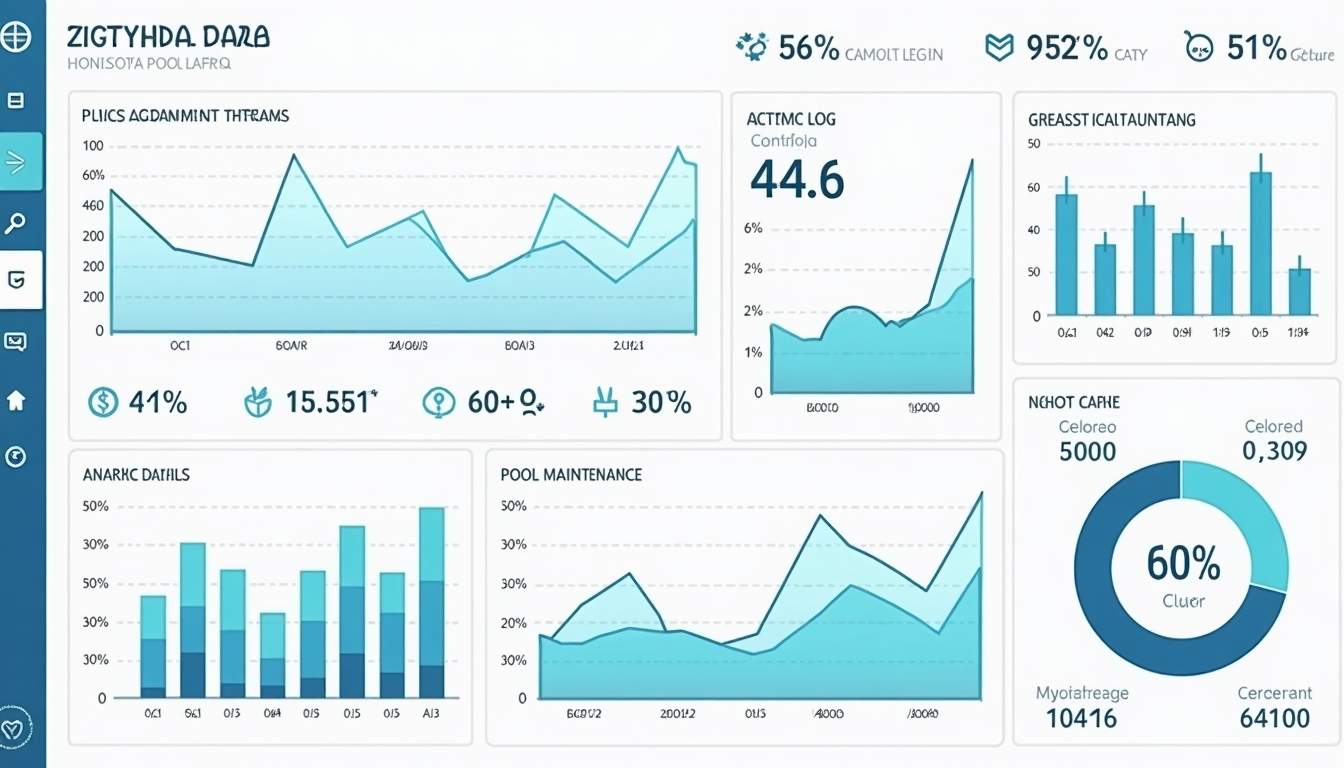
Once automation is in place, your system starts collecting clean, structured data without anyone building spreadsheets at night. That data should guide decisions on staffing, pricing, and service offerings. For example, comparing travel time versus billable time per route, or chemical consumption per account, can reveal where routes need rebalancing or pricing needs adjustment.
Trends across your customer base can also highlight new revenue opportunities. Rapid adoption of LED lighting, with usage growing by 35% in the past five yearsanchor, and strong demand for covers and advanced filtration both point toward bundled upgrade packages that clearly improve safety and operating costs for customersanchoranchor. Your operations platform should make it easy to identify which accounts are most likely to benefit and to push structured follow-ups to sales or technicians.
Data only becomes useful when it leads to action. Build simple dashboards that your managers actually review in weekly meetings: job completion rates, callbacks, average ticket value, on-time arrival performance, and technician utilization. Tie those metrics back to your automation initiatives so you can see what is genuinely moving the needle.
Implementation Playbook: Rolling Out Automation Without Chaos
Automation can feel intimidating, especially for teams that have run on paper and whiteboards for years. A structured rollout helps avoid overwhelm. Start with one or two high-impact areas-often scheduling and field documentation-then expand once the team is comfortable.
Pick a pilot group of technicians and office staff who are open to change, and involve them early in designing workflows and forms. Configure your platform to match how your business actually works, not how a generic template says it should. Train with real jobs, not hypothetical examples, and keep the feedback loop tight so small frustrations get solved quickly.
As you expand automation into billing, monitoring integrations, and customer communication, keep explaining the “why” to your team: less rework, fewer late nights catching up on paperwork, and more bandwidth for complex, rewarding work. When employees see automation as taking away the tedious tasks-not their value-they become powerful advocates for continuous improvement.
Making Automation Your Competitive Advantage
Pool service is still a relationship business, but the operational backbone now decides who wins. The market is growing, customer equipment is getting smarter, and expectations for responsiveness and transparency are only risinganchoranchor. The companies that thrive treat automation as the quiet engine behind every clean pool, clear invoice, and proactive recommendation.
Done well, automation does not replace your people; it amplifies them. Dispatchers shift from juggling chaos to managing exceptions. Technicians spend more time solving problems and less time on paperwork. Owners get a real view of profitability so they can invest in the right equipment, training, and marketing. That is what an optimized, automated pool operation looks like: not more complexity, but a simpler, faster way to run a demanding business at scale.