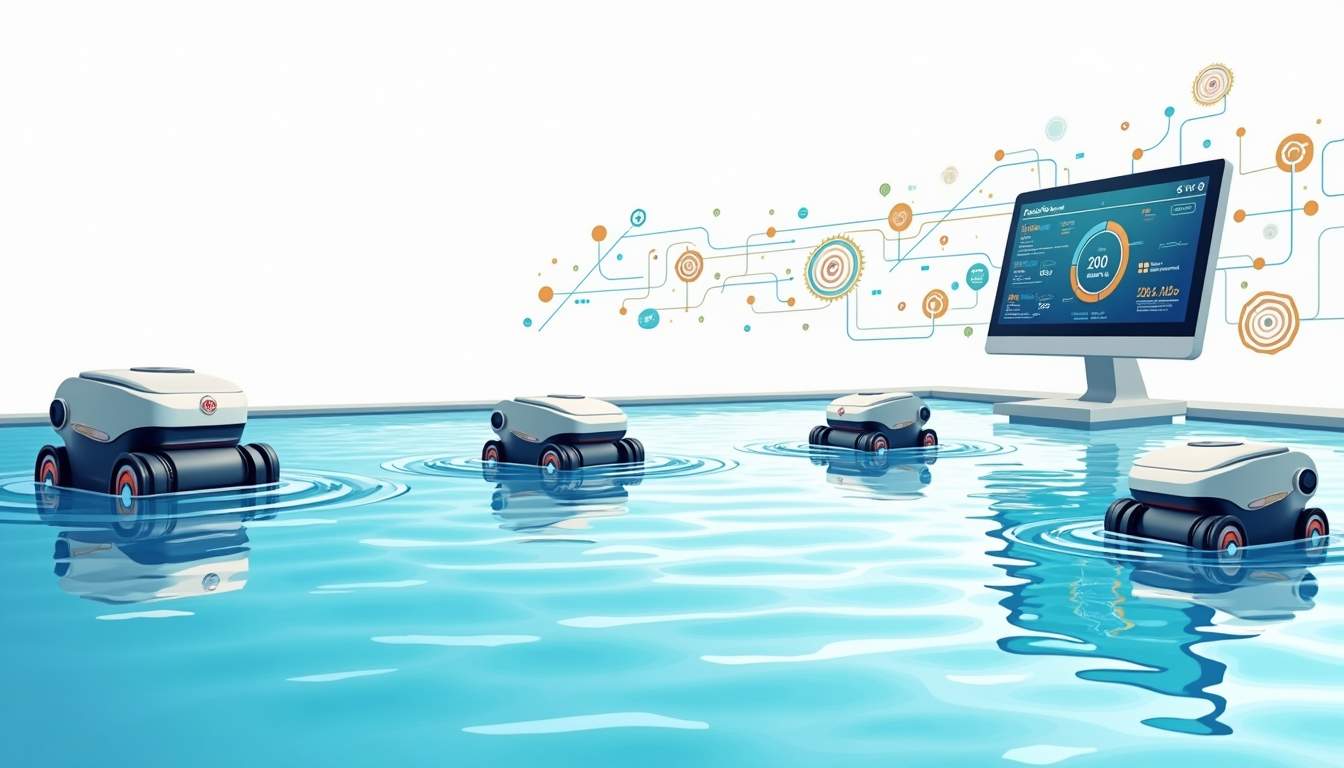
Automation in pool service businesses isn’t just a trend-it’s a strategic game changer. With intelligent systems transforming daily operations, service providers are reaping benefits once thought impossible. This article delves deep into the ways AI-driven automation is reshaping pool maintenance, customer engagement, and overall operational efficiency.
Older models of manual operations are gradually giving way to streamlined, automated processes that increase accuracy and reduce costs. As technology continues to evolve, service companies are discovering sustainable methods to enhance both safety and profitability.
The Rise of AI in Pool Automation
Shifting Towards Intelligent Systems
Recent studies and industry reports clearly indicate a strong shift toward integrating AI-driven technologies into pool service operations. An impressive number of pool owners-nearly 60%-now favor AI-powered management systems to boost overall efficiency. This preference highlights a growing recognition of the value that such technologies bring to daily operations [zipdo.co].

Advanced AI algorithms are now capable of performing critical tasks that were once labor-intensive. These include routine maintenance scheduling, real-time monitoring, and even predicting necessary repairs before a minor issue escalates. As a result, companies are more agile and responsive to client needs.
Automation helps not only to improve service accuracy but also to free up time for staff to focus on more strategic or personalized aspects of service. This shift in operational focus is enhancing overall productivity and customer satisfaction within the industry.
Embracing the Digital Transformation
The digital age has ushered in a new era of operational efficiency, and pool service businesses are no exception. With the introduction of AI-based pool management tools, the industry is adjusting quickly to meet current expectations. Many pool maintenance companies are utilizing systems that offer continuous monitoring, rapid data analysis, and even adaptive responses to potential issues.
Data-driven decisions are becoming the standard. AI’s ability to collect, analyze, and interpret large volumes of information provides businesses with a clear and actionable picture of their operations. Even more compelling is the fact that 65% of pool maintenance companies plan to expand their AI capabilities in the near future [zipdo.co], demonstrating a vital confidence in the efficiency gains these systems offer.
Such digital transformation efforts ensure that the industry remains relevant and competitive. The merging of automation with pool service operations has led to not just improved service performance but also a more satisfying customer experience overall.
Streamlining Maintenance with Intelligent Systems
Efficient Diagnostics and Predictive Maintenance
Automation in pool maintenance is profoundly changing how routine upkeep is approached. AI-based sensors are capable of detecting chemical imbalances with an impressive 95% accuracy [zipdo.co]. This capability minimizes the chance of oversights, ensuring that every pool maintains optimal water quality and balance.
Beyond diagnostics, predictive maintenance powered by AI is a game changer. Repairs can now be anticipated before a small malfunction turns into an expensive, prolonged downtime. For instance, AI-driven leak detection systems have been credited with reducing repair costs by an average of 22% [zipdo.co]. These systems continuously monitor the pool structure, detecting even the smallest deviations from standard performance levels.
With automation, routine maintenance tasks streamline into fewer, yet more focused, operations. This change translates into operational cost savings and improved performance, giving service providers a competitive edge.
Automated Cleaning and Chemical Usage Optimization
Another significant benefit of automation is seen in the realm of pool cleaning. AI-based pool cleaning robots have seen their market share expand by 30% in recent years [zipdo.co]. These robots optimize cleaning patterns and schedules, ensuring pools remain spotless without the inconsistency of manual intervention.
Reducing chemical usage without compromising water quality is another achievement credited to AI. Automated water quality sensors contribute to a decrease in chemical consumption by as much as 15% in commercial settings [zipdo.co]. Lower chemical usage not only results in substantial cost savings but also promotes a more environmentally friendly operation.
This combination of optimized cleaning and chemical management strengthens the operational resilience of pool service companies, making regular upkeep more efficient and sustainable over time.
Enhancing Customer Service Through Automation
Proactive Customer Support Systems
Customer satisfaction remains the cornerstone of any successful service business, and automation plays a pivotal role in ensuring that pools and their patrons are constantly well taken care of. AI-driven customer service chatbots now handle pool troubleshooting queries effectively, having managed over 10,000 queries in just the past year [zipdo.co].
These virtual assistants are available 24/7, offering immediate support that is not limited by human work shifts. This constant availability ensures that pool owners have a dependable point of contact whenever an issue arises, fostering trust and reliability in the service provided.
The rise of automation in customer service not only expedites the resolution process but also frees up human agents to tackle more complex challenges, enhancing overall service quality and efficiency.
Seamless Booking and Scheduling
Another area where automation is making a significant impact is in appointment scheduling. Virtual assistants powered by AI have increased booking and service appointments by 20% [zipdo.co]. Streamlining the booking process means that service providers can handle more appointments without overwhelming administrative staff.
In a competitive industry, offering a seamless customer experience can be the key difference between retaining a client and losing one. By automating reservations and routine follow-ups, pool service companies streamline their interactions, ensuring a smoother, more satisfying customer journey.
With fewer manual errors and quicker responses, automated systems free up valuable time for managers to concentrate on strategic growth and customer engagement, thus driving more revenue in the long term.
Energy Efficiency and Operational Cost Savings
Conserving Energy with Smart Systems
One of the standout benefits of integrating AI and automation into pool service operations is the palpable saving in energy costs. AI-powered filtration systems have led to improvements in energy efficiency by 20% [zipdo.co]. This reduction in energy consumption is not just beneficial to the bottom line-it also contributes to a more environmentally sustainable operation.
AI also plays a significant role in optimizing the energy usage of pool heaters. With automated systems reducing heater energy consumption by up to 18% [zipdo.co], service companies are able to address fluctuating temperature needs more dynamically. AI-based predictive analytics further help pool managers forecast energy requirements accurately, ensuring optimal performance without wastage.
The environmental benefits are coupled with financial gains. Energy-efficient systems reduce overheads and allow companies to redirect savings into other areas, such as technology upgrades or enhanced customer service, increasing overall business resilience.
Improving Water Management
Water is one of the most significant operational costs for pool management. Automated monitoring systems are now extensively used to manage water consumption effectively. Certain AI monitoring systems have been shown to reduce water waste in pools by up to 25% [zipdo.co], making them invaluable in regions where water conservation is a priority.
This reduction in water waste is achieved through constant oversight-detecting and resolving leaks swiftly and ensuring that water is recirculated and treated optimally. In commercial settings, these efficiencies translate into considerable cost savings, empowering businesses to invest further in technological innovation.
Optimized water management not only cuts costs but also elevates the environmental profile of pool service providers, aligning them with wider sustainability trends that are increasingly important to today's consumers.
Real-Time Surveillance and Safety Enhancements
Integrating AI for Enhanced Safety
Safety in recreational facilities is paramount, and automation is revolutionizing this aspect with advanced AI monitoring systems. Nearly 55% of commercial pools now use AI for real-time surveillance and safety monitoring [zipdo.co], underscoring the technology’s role in creating secure environments.
These surveillance systems, equipped with AI, provide continuous monitoring without human fatigue. Such systems automatically alert staff of unusual patterns or potential hazards, ensuring prompt responses to incidents before they escalate into serious issues.
Beyond traditional safety measures, AI-enhanced crowd control is also emerging as a critical factor in maintaining operational order. For example, 25% of commercial pools now employ AI systems to manage occupancy and scheduling, which improves overall flow and safety [zipdo.co]. This level of control is particularly beneficial during peak hours or special events, where efficient crowd management can prevent congestion and potential accidents.
Automated Compliance and Regulatory Benefits
Regulatory adherence is a day-to-day challenge for many pool service providers. Automation using AI significantly eases the compliance burden. About 62% of swimming pools have integrated AI solutions to meet new environmental regulations that require precise monitoring and reduced environmental impact [zipdo.co].
Such systems automatically monitor water quality, chemical levels, and energy usage, ensuring that facilities consistently meet or exceed regulatory standards. Automated reporting further streamlines the compliance process by accurately documenting maintenance and operational data.
The ongoing integration of these systems not only simplifies regulatory oversight but also reinforces the reputation of pool service providers as technologically advanced and conscientious stewards of both customer safety and environmental wellbeing.
Maximizing Profit Margins with AI-Driven Pricing and Scheduling
Innovative Pricing Models
Profit margins in the competitive pool service industry are increasingly being optimized using AI. Advanced pricing models informed by predictive analytics have led to a 12% increase in profit margins for several service providers [zipdo.co]. AI systems analyze historical data, market trends, and local dynamics to develop competitive yet profitable pricing strategies.

This dynamic pricing approach ensures that service providers can adjust costs based on demand, seasonality, and even unexpected events, resulting in a more resilient and responsive business model. Such innovations are rapidly setting new standards within the industry.
By consistently refining pricing strategies, companies not only attract a broader customer base but also enhance long-term financial stability, allowing for reinvestment in further technological upgrades and service improvements.
Optimized Scheduling and Resource Allocation
Busy service schedules can often lead to logistical challenges and missed opportunities. AI-based scheduling tools are now a critical asset for balancing multiple appointments, reducing downtime, and ensuring efficient resource allocation. With automated scheduling, disruptions are minimized, and each service call receives optimum attention.
This streamlined approach has been credited with increasing operational bookings by 20% [zipdo.co]. By ensuring that the right personnel are deployed at the right time, overall service quality improves and customer satisfaction soars.
Moreover, the system's ability to forecast busy periods and allocate resources dynamically is a boon to both commercial pools and luxury facilities, where operational reliability is critical.
Future Trends in Pool Service Automation
Expanding Integration: Beyond Routine Maintenance
As automation technology evolves, its integration in pool operations is set to expand beyond routine maintenance and customer service. Research suggests that nearly 80% of new pool products incorporate AI integration in their design [zipdo.co], reflecting a broader shift toward interconnected, smart ecosystems across the industry.
Emerging applications include advanced climate prediction tools, which are already in use in urban residential pools to optimize pool temperatures [zipdo.co]. The merging of environmental data with operational decisions allows pool systems to adapt actively to changing weather patterns, conserving energy and reducing wear on infrastructure.
This trend towards comprehensive automation not only simplifies service management but also drives innovation in product development, ensuring that pool systems remain at the forefront of technological progress.
Harnessing Big Data for Strategic Growth
The future of pool service automation is not limited to isolated applications; it involves a holistic approach to operational efficiency. AI is evolving to offer advanced predictive analytics that analyze operational data in real time. Nearly 58% of commercial pools now utilize AI to analyze data for future planning [zipdo.co]. This strategic use of big data enables companies to forecast demand more accurately, streamline maintenance operations, and ultimately, drive long-term profitability.
As more data becomes available, the algorithms driving these systems will become even more precise, paving the way for innovations that are currently unimaginable. The continuous feedback loop created by AI insights ensures that pool service providers remain agile, ready to adapt operations as market conditions and consumer behaviors change.
All these advancements indicate that the future of pool service automation is not only bright but also rich in opportunities for companies that are eager to innovate and embrace new technological frontiers.
Embracing a Smarter, More Sustainable Future
The Environmental Impact of AI Integration
As businesses increasingly adopt AI-driven systems for pool automation, the environmental benefits are becoming clear. AI-based monitoring systems assist in reducing both chemical usage and water waste-key factors in achieving a greener operation. Commercial pools, for instance, have seen a 15% decrease in chemical usage due to AI-based sensors [zipdo.co], while water management systems have cut water waste by up to 25% [zipdo.co].
These improvements contribute significantly to environmental sustainability. Alongside reduced energy consumption from AI-powered filtration systems, these measures help pool service operations align with global environmental goals without sacrificing operational efficiency or customer satisfaction.
The implications of these technological integrations extend beyond immediate cost savings. They represent a long-term commitment to reducing the environmental footprint while maintaining high service standards-a balance that is becoming increasingly essential in modern business operations.
Building Trust and Confidence in AI Solutions
Adopting AI-driven automation can sometimes raise concerns regarding reliability and complexity. However, the significant improvements in predictive accuracy and operational efficiency demonstrate that these systems are more than just technological gimmicks.
With 70% of new pool installations featuring AI-based safety features [zipdo.co] and a robust track record of streamlining maintenance routines, trust in these technologies is growing rapidly. The pressure on service providers to remain competitive while ensuring customer safety and satisfaction makes AI integration a necessary investment for the future.
Transparency in these processes, along with consistent performance improvements, continues to build confidence among both service providers and customers. This, in turn, catalyzes further innovation and adoption across the industry.
Strategic Considerations for Implementation
Start with a Comprehensive Assessment
Before integrating AI-driven automation, pool service businesses should conduct a thorough review of their current operations. Identifying inefficiencies and areas that could benefit most from automation is critical to achieving a smooth transition.
Operational audits help reveal where time, personnel, or resource bottlenecks exist. With a clear picture of these challenges, companies can deploy AI solutions in stages-ensuring that areas such as maintenance, customer support, or energy management are updated methodically and with maximum impact.
This assessment ensures that investments in technology yield the best possible return, laying the foundation for long-term operational success and customer satisfaction.
Investing in Scalable AI Infrastructure
Scalability is another crucial factor when considering automation. As pool service companies grow, their operational complexity tends to increase. AI platforms that can scale alongside business expansion ensure that the transition to automation remains smooth and beneficial.
Recent data indicates that advanced AI systems have been successfully adopted across various settings-from residential pools with AI-based climate prediction tools, used by 33% of urban customers [zipdo.co], to commercial pools implementing automated surveillance solutions in 55% of operations [zipdo.co].
This level of adaptability ensures that no matter how much a business expands, its core operations remain optimized and responsive to change.
Conclusion: A Revolution in Pool Service Operations
Pool service business automation is not a distant future; it is here now, significantly transforming how companies operate. With the introduction of AI-driven technologies, service providers can expect a future marked by improved efficiency, reduced operational costs, and enhanced customer satisfaction.

The integration of automated sensors, predictive analytics, and intelligent surveillance not only streamlines maintenance but also sets new benchmarks for safety and environmental sustainability. These innovations have given rise to improved pricing models, more reliable scheduling systems, and a shift towards a greener operational approach-all of which are measurable in concrete performance improvements.
As industry reports indicate an upward trend in AI adoption and the expansion of its capabilities-from a 30% increase in AI-powered pool cleaning robots to projected market sizes hitting $1.2 billion by 2025 [zipdo.co]-pool service businesses are clearly on the threshold of a transformative era. Embracing this evolution is not about keeping up; it’s about setting the pace in a rapidly changing landscape.
By harnessing data-driven insights and investing in scalable, cutting-edge AI solutions, pool service providers can unlock unprecedented operational efficiencies, elevate the customer experience, and pave the way for a more sustainable and profitable future. The digital revolution in pool maintenance is well underway, promising not just incremental improvements but a complete transformation of the industry.