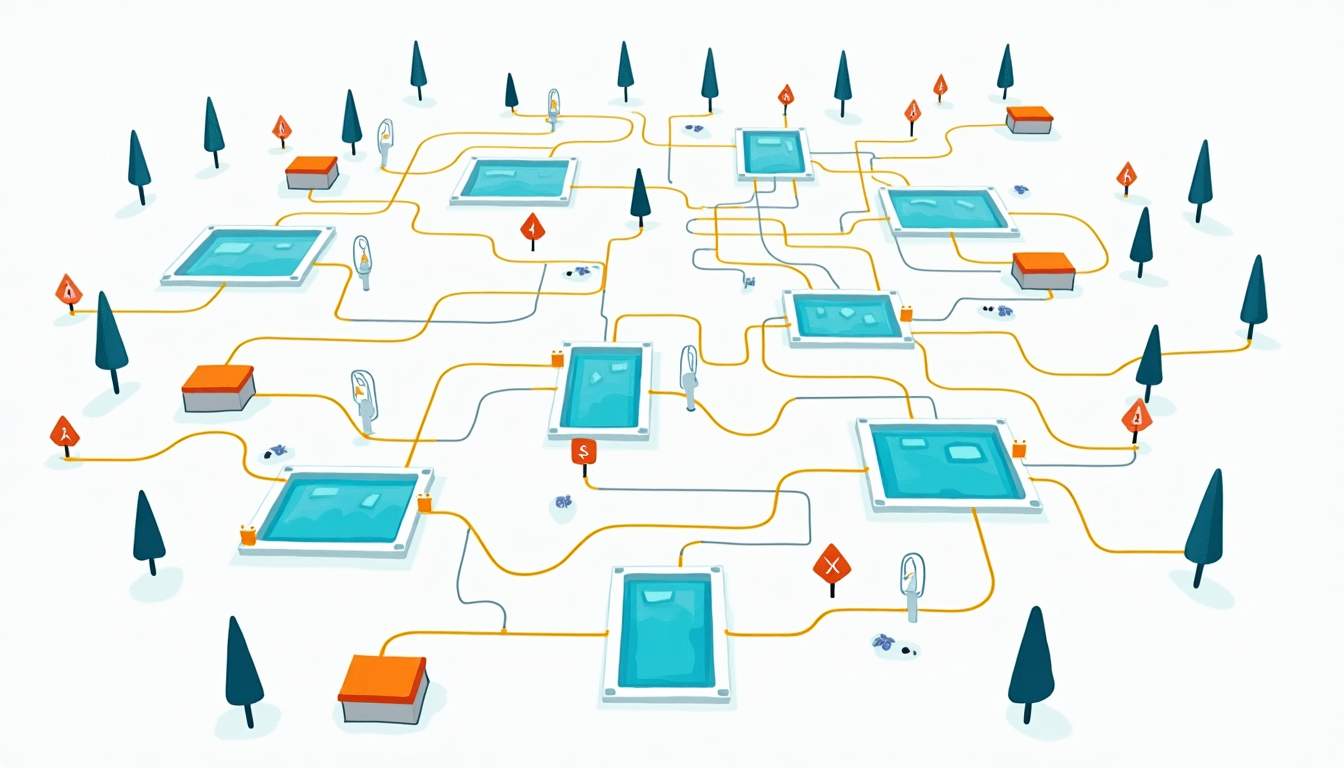
The difference between a pool business that coasts through summer and one that melts down usually isn’t effort. It’s systems. When routes, chemicals, billing, and technician schedules all live in different places, busy season turns into a daily scramble. The right software turns that chaos into a repeatable machine: techs know exactly where to go, invoices go out automatically, customers stay informed, and owners finally get real visibility into profitability.
Why Pool Companies Are Leveling Up Their Software Right Now
Pool service isn’t slowing down. According to Skimmer’s 2025 State of Pool Service Report, 81% of pool service professionals expect to increase their revenue in 2025. Growth is great, but it also magnifies any weak spots in scheduling, communication, billing, and quality control. A route that feels manageable today can become a liability when the customer list grows and the call volume spikes.
The same report shows that 60% of pool pros plan to prioritize internal efficiencies to support profitability in 2025. That’s a clear signal: owners understand they can’t just work harder; they have to work smarter. Software is the lever that lets a business tighten routes, standardize visits, control chemical costs, and keep administrative overhead from ballooning as the customer base grows.
The Non‑Negotiable Features Pool Service Software Should Include
Plenty of field service tools claim they “work for pool companies,” but pool routes bring their own quirks. Water chemistry, seasonal spikes, high-frequency visits, and equipment-heavy backyards all add complexity. The best platforms for pool service are built (or configured) around these realities rather than forcing teams to bend their processes to generic workflows.
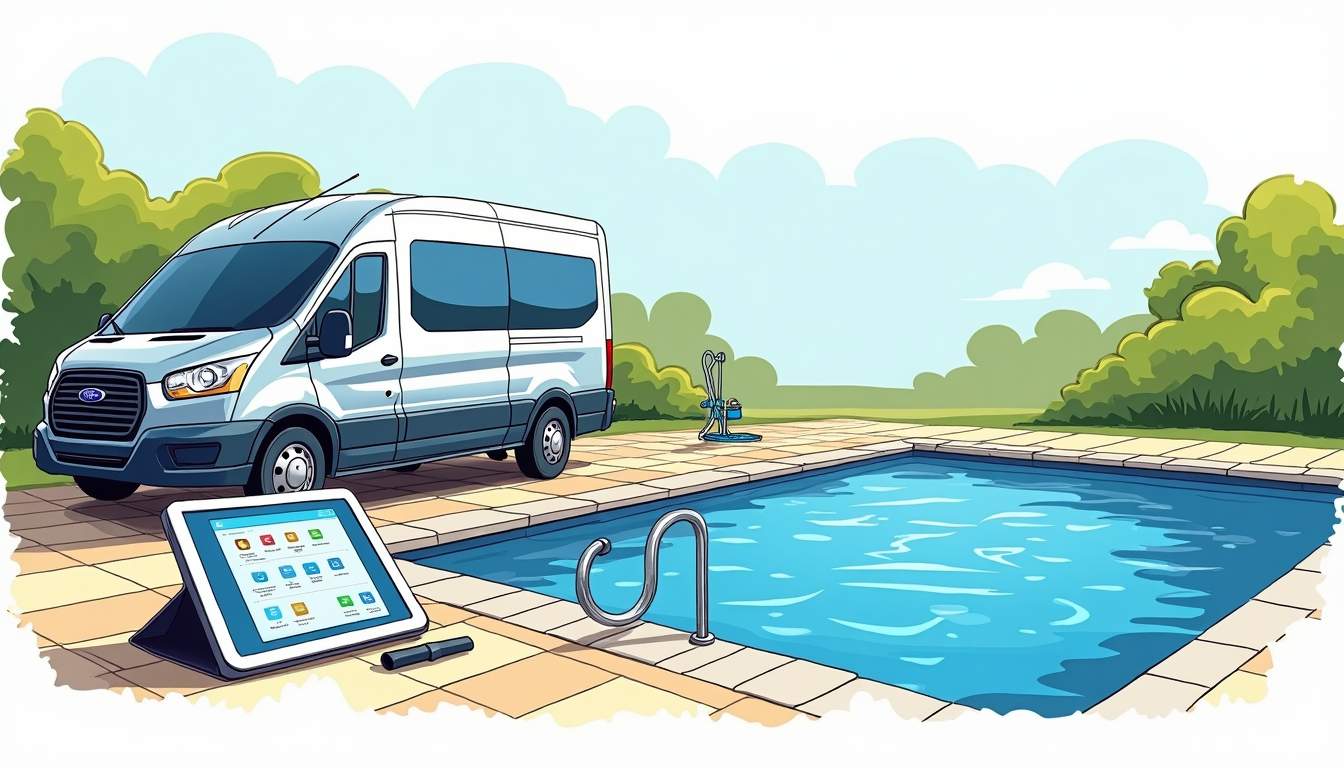
Before diving into specific products, it helps to get clear on the core capabilities that actually move the needle. Choosing software that checks these boxes will do more for revenue, retention, and sanity than any flashy add‑on or one-off integration.
Smart Scheduling and Route Optimization
Paper calendars and basic spreadsheet schedules break down fast once multiple techs, traffic patterns, and dense routes enter the picture. Strong pool service software lets dispatchers see every stop on a map, drag-and-drop jobs between techs, and route visits in an order that cuts windshield time and fuel costs. When customers call to reschedule, those changes should ripple through routes automatically rather than forcing a full rebuild.
Equally important is recurring scheduling. Weekly, bi-weekly, and seasonal visits should be generated automatically with clear visibility into who is going where and when. That consistency is what keeps customers on plan, reduces missed visits, and supports predictable cash flow.
Mobile App for Technicians That Actually Works in the Field
For most pool businesses, technicians live inside the mobile app. If it’s clunky, slow, or buried in menus, adoption drops and data quality disappears. The best solutions give techs a clean daily schedule, GPS directions, digital checklists, a quick way to record chemical readings, attach photos, and capture customer signatures-all without fighting the interface.
Offline capabilities matter, too. Backyards and equipment pads aren’t always friendly to cell signals. A well-designed app lets techs complete work, then syncs automatically when the connection returns, so notes and readings never vanish into the ether.
Chemical Tracking and Service History
Pool service is part science, part detective work. Software should log readings and chemical dosages at every visit, so anyone can open an account and see a clear water chemistry timeline. That history becomes invaluable when customers question a green pool, when techs rotate routes, or when diagnosing recurring issues with equipment or water quality.
Over time, that data also exposes patterns: which pools burn through chlorine, which techs consistently use more chemicals than their peers, and where additional training or upsells (like automation or covers) would help stabilize the water and the margins.
Billing, Payments, and Profit Control
Billing is where pool service software often pays for itself. Skimmer’s report notes that 55% of pool service professionals bill monthly, including chemical services. Flat-rate monthly billing with chemicals bundled in is easier on customers and cleaner for bookkeeping, but only if the software can handle it without endless manual adjustments.
Look for tools that support recurring invoices, card-on-file payments, surcharges when chemical usage spikes, and one-off repair charges. The goal is simple: every visit that happens should turn into revenue automatically, without chasing checks or reconciling handwritten notes at the end of the week.
Growth, Hiring, and New Services: What Your Software Must Handle Next
Most pool companies aren’t just trying to maintain their current book; they’re building for the next stage. According to Skimmer’s 2025 report, 55% of pool service professionals plan to hire more staff in 2025. That shift turns owner-operator shops into multi‑tech teams that need standardized workflows, permissions, and accountability baked into their systems.

At the same time, 60% of pool businesses plan to expand into other lines of business, with repairs the most common area of interest. That means software can’t just be a route calendar; it has to support inspections, estimates, larger projects, parts tracking, and multi-visit jobs. If the platform breaks the moment a job gets more complex than a weekly clean, it’s not ready for the next phase of growth.
Marketing, Referrals, and Lead Management
New revenue doesn’t appear by accident. Skimmer’s data shows that 71% of pool service professionals invest in referrals as a top marketing channel, and 60% plan to increase their marketing spending in 2025. Software should help translate that spend and word-of-mouth goodwill into booked and trackable work, not just more noise in an inbox.
The strongest platforms either include basic CRM and marketing capabilities or integrate cleanly with tools that do. Think simple referral tracking, automated review requests, follow-ups for aging leads, and segmented customer lists for targeted campaigns-like promoting heater tune-ups ahead of cold snaps or opening cleanups before spring.
How to Choose the Right Pool Service Software for Your Business
The “best” platform is the one that fits the way a specific business makes money, not the one with the longest feature checklist. A small, owner‑operator route with one helper has different needs than a multi‑crew company adding remodels and automation installs. A clear selection process avoids expensive misfits and painful migrations down the road.
Instead of starting with demos, it pays to start with a whiteboard. Map out the current workflow from lead to cash, then decide where software must step in, where it can help, and what absolutely cannot change without breaking the business.
Step 1: Define the Problems, Not Just the Features
List the real pain points: missed visits, unpaid invoices, lost keys, techs driving across town for no reason, customers calling for updates, or confusion over who approved a repair. Then prioritize them. Software should directly attack those top problems, not just add a dashboard and a new login.
For many pool businesses, the most urgent issues line up with industry trends. With 60% of pros focusing on internal efficiencies for profitability, it’s clear that scheduling, routes, and admin time are under the microscope. If a tool doesn’t make those items measurably better, it’s not the right fit.
Step 2: Match Software to Growth Plans
A platform that feels comfortable today can become restrictive once more staff and services are in play. That’s especially important given that 55% of pool service companies plan to hire more staff and 60% plan to expand into new lines of business such as repairs. Choose a system that can handle more technicians, more complex jobs, and perhaps even new branches without forcing a complete restart.
Ask vendors pointed questions about multi‑tech dispatch, job types, equipment and parts tracking, and permissions. A good sign: they can clearly show how a company like yours scaled on their platform without resorting to awkward workarounds.
Step 3: Evaluate Billing Models and Cash Flow Fit
How customers are billed is one of the most expensive parts of a bad software choice. With 55% of pool pros billing monthly with chemicals included, recurring invoicing and predictable charges are non‑negotiable for much of the industry. Make sure the platform supports your model-whether that’s flat-rate service, tiered plans, time-and-materials repairs, or pre‑paid seasonal packages-without constant manual intervention.
Also look at payment options: online payments, card‑on‑file, ACH, and automated dunning for failed charges. Cleaner billing isn’t just about admin efficiency; it directly influences cash flow and the ability to invest back into marketing, hiring, and better equipment.
Rolling Out New Software Without Blowing Up Your Routes
Even the perfect platform fails if the rollout is rushed or half‑baked. Technicians fall back to old habits, data ends up incomplete, and owners are left paying for software that doesn’t reflect reality. A deliberate implementation plan keeps the business running while new systems come online.
Start with a small pilot-one route or one service type-rather than flipping the whole operation overnight. That controlled test will surface configuration issues, training gaps, and missing fields before they scale across the entire customer list.
Training the Team and Standardizing Processes
Software doesn’t replace process; it enforces it. Use implementation as a chance to define what a “complete” visit looks like: which photos are required, which chemical readings must be logged, what notes should always be captured, and when to trigger a repair recommendation. Then train to that standard and use the software’s checklists and required fields to reinforce it.
Maintaining morale through the change is just as important. Techs need to see how the new system makes their day easier-fewer back‑and‑forth calls, less guesswork, faster paychecks-rather than just feeling watched. Owners who connect the dots between better data and better bonuses or career paths usually see smoother adoption.
Using Data to Steer the Business
Once the software is live, the real value comes from consistent reporting. Pull service completion rates, repeat issues by pool, chemical costs by route, and revenue per technician. Tie those numbers back to the industry’s direction: with 60% of businesses planning to boost marketing and 60% preparing to expand services, leaders with accurate data will be far better positioned to decide where to invest.
There’s also an exit-angle benefit. Skimmer’s research notes that 29% of pool pros would consider selling their company to a private equity firm. Clean, systematized operations and reliable data trails often translate into stronger valuations and smoother due diligence if that day comes.
Final Thoughts: Build a System That Outlasts Busy Season
Pool service will always be a hands‑on business. Pumps still need rebuilding, filters still need cleaning, and green pools still need rescuing. What’s changing is how organized companies are behind the scenes. With most pros expecting revenue growth and a large share focusing on internal efficiency, hiring, marketing, and new services, the gap between software‑powered operations and everyone else is only going to widen.

Choosing the best software for a pool service company isn’t about chasing trends or buzzwords. It’s about building a durable system: routes that make sense, visits that are documented, billing that just works, and data that tells the truth about profitability. Get that foundation right, and the next peak season stops being something to survive and becomes something the business is ready to scale.